
93 per cent Indians expect to see modest or substantial top-line growth at their companies.
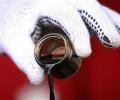
Skittish investors snapped up gold and other safe-haven assets amid fears of a global economic slowdown

UBS, Credit Suisse see emerging markets doing well next year, but expect India to underperform, given its rich valuations.

Supply chain constraints will keep plaguing automobile companies even though demand significantly improved resulting in a 13 per cent year-on-year (YoY) increase in sales in financial year 2021-22 (FY22). Executives at auto firms fear that the Russia-Ukraine war will further dent the sector's prospects of recovery as supply chains face more disruptions. "The visibility in the supply side is so hazy that it is difficult to give even one quarter projection. But all the parameters of demand like pending bookings and enquiries are increasing.

Moody's on Monday slashed India's growth forecast for 2020 to 5.4 per cent from 6.6 per cent projected earlier, on slower than expected economic recovery. In its update on Global Macro Outlook, Moody's Investors Service said India's economy has decelerated rapidly over the last 2 years and economic recovery is likely to be 'shallow'.

Indian rupee is likely to test 76-76.50 levels as a relatively strong greenback, boiling crude prices and COVID headwinds deepen the depreciation bias for the domestic currency, according to experts. One of the significantly-hit Asian currency in recent months amid uncertain economic times, rupee is expected to see a consolidation in the vicinity of the current level before being pulled towards the depreciation bias. While the equity market has been surging with occasional blips, the rupee has mostly been weak against the US dollar in recent months.

TCS was the top gainer in the Sensex pack, rising around 4 per cent, followed by ONGC, ICICI Bank, HDFC Bank, Dr Reddy's, HDFC and HCL Tech. NSE Nifty advanced 76.65 points to 14,581.45.
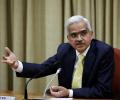
The Reserve Bank remains laser-focused to bring back retail inflation to 4 per cent over a period of time in a non-disruptive manner, Governor Shaktikanta Das stressed while voting for status quo in interest rates, as per minutes of the October policy meeting released on Friday. The central bank has been mandated by the government to ensure the Consumer Price Index (CPI) based inflation is at 4 per cent, with a band of 2 per cent on either side. The retail inflation, which was above 6 per cent during May and June, has started moving down and stood at 4.35 per cent in September.

Though most analysts expect the global central banks to keep the liquidity tap open, valuations of Indian markets, they say, are beginning to look stretched. Against this backdrop, they remain cautious, with some even expecting a minor correction from here on.
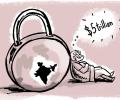
India will need $8 trillion (around Rs 588 lakh crore) of gross capital formation or new greenfield assets to become a $5 trillion (around Rs 368 lakh crore) economy by FY2027, a report said. The report by Deloitte said despite the COVID-19 disruption, FDI inflow into the country provides necessary optimism and display underlying strengths of the Indian economy. In FY2020-21, FDI inflows (including equity, re-invested earnings, and capital) amounted to a record $81.72 billion, 10 per cent higher than the previous financial year, it said.
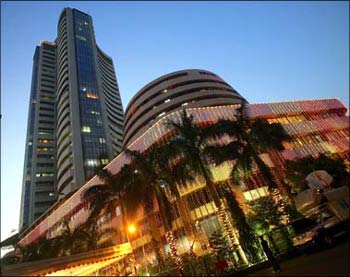
It will be difficult for the Indian equity to outperform overall growth to the extent bullish observers expect.

'This is a period of significant uncertainty, of unknown unknowns.'
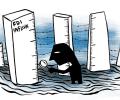
A series of steps taken by the government to promote ease of doing business and liberalisation of foreign direct investment norms have helped India receive record FDI inflows so far this year, and implementation of measures like PM Gati Shakti, single window clearance and GIS-mapped land bank are expected to further push investments in 2022. Notwithstanding the global slowdown and the COVID-19 pandemic, total foreign direct investments into India rose to a record $81.72 billion in 2020-21. During April-July this fiscal, FDI (foreign direct investment) into the country increased by 62 per cent to $27.37 billion.
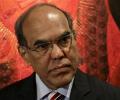
Subbarao said, short-term as well as medium-term prospects or Indian economy continue to be grim. Fiscal deficit is going to be much higher, the debt burden much larger and the financial sector will be in a worse shape.
The UN Conference on Trade and Development (UNCTAD) said in a report on Monday that a lower but positive economic growth in India in the post-Covid-19 pandemic period and India's large market will continue to attract market-seeking investments to the country. The World Investment Report 2020 by UNCTAD said that India was the 9th largest recipient of FDI in 2019, with 51 billion dollars of inflows during the year, an increase from the 42 billion dollars of FDI received in 2018, when India ranked 12 among the top 20 host economies in the world.
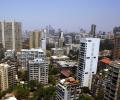
The marginal increase in absorption is expected to be accompanied by a drop in the number of new launches by 8 per cent to 72,113 units during 2014.

Chastened by the Kargil conflict, Pervez Musharraf will be remembered for gradually lowering the profile of terrorism and seeking a realistically negotiated settlement to the issue of Jammu and Kashmir, notes Ambassador G Parthasarathy, who served as India's high commissioner to Pakistan when Musharraf seized power in a coup in October 1999.

At the same time, the UN said in a report, the performance of private investment remains a key macroeconomic concern.

In India, total employment grew by only 0.1 per cent yearly over the five years till 2009-10, says the report, "from 457.9 million in 2004-05 to 458.4 mn in 2009-10, while labour productivity grew 34 per cent over this period".

We have our own problems for sure and they are not trivial, but for now, our economy is in not too bad a shape, our politics is as personality-driven and authoritarian as that of most countries in the world. We must make the best of what we have and not be excessively unhappy looking at the grass on the other side of the septic tank which may not be greener after all!, observes Shreekant Sambrani.

India's services sector activities eased to a three-month low in April, as the rise in business activity was constrained by the pandemic and sentiment towards growth prospects faded, a monthly survey said on Wednesday. The seasonally adjusted India Services Business Activity Index fell to 54 in April from 54.6 in March, the slowest increase in output in three months. In PMI parlance, a print above 50 means expansion while a score below 50 denotes contraction.

However, the World Bank has projected India's GDP growth rate at 7.5 per cent for the next three financial years, including the current one.

The Survey shows fiscal consolidation despite slowdown in growth.

'Rising Covid cases and localised lockdowns are being closely monitored.'

The fundamental debate remains where you stand on the long-term growth question. That is what every investor must monitor and come to their own conclusions, suggests Akash Prakash.

Asian Paints was the top laggard in the Sensex pack, falling around 5 per cent, followed by Bajaj Finance, HDFC, IndusInd Bank, Axis Bank and Kotak Bank. On the other hand, Tech Mahindra, Sun Pharma, Bharti Airtel and HCL Tech were among the gainers.

2014 was a year for downturn for most economies across the globe.
While foreign currency rating was retained at Baa2 -- the second-lowest investment grade score -- Moody's also projected a fiscal deficit of 3.7 per cent of gross domestic product in the year through March 2020, a breach of the government's target of 3.3 per cent.
Further, the survey found that 60 per cent of the Indians felt under lot of pressure to be successful and make money while 58 per cent were most likely to measure their success by what they own.

India's sovereign credit ratings do not reflect the economy's fundamentals, the Economic Survey said on Friday and nudged the global agencies to become more transparent and less subjective in their ratings. The Economic Survey 2020-21, tabled in Parliament, said that sovereign credit ratings methodology must be amended to reflect economies' ability and willingness to pay their debt obligations, and suggested that developing economies must come together to address this bias and subjectivity inherent in sovereign credit ratings methodology. "Never in the history of sovereign credit ratings has the fifth largest economy in the world been rated as the lowest rung of the investment-grade (BBB-/Baa3). While sovereign credit ratings do not reflect the Indian economy's fundamentals, noisy, opaque and biased credit ratings damage FPI flows," the survey said.

'The future is about autonomy and tanking.'
Foreign Direct Investment (FDI) is critically important for India to become a $5 trillion economy, Deloitte CEO Punit Renjen said while noting that over two-fifths of the 1,200 business leaders surveyed in the US, UK, Japan and Singapore are planning additional or first-time investments in India. Referring to the survey, he said India continues to be "one of the most attractive" FDI destinations. "Despite the COVID-19 destruction, inflows hit a record high last year. "Business leaders, whom Deloitte surveyed, are preparing to make additional and first-time investments in India," Renjen said.

US rate hike fear keeps Asian firms in check; India most upbeat.

'The recent correction in indices has made the markets cheaper to invest for the long term.'

CNG price in the national capital and adjoining cities on Tuesday was hiked by Rs 0.50 per kg, while an imminent increase in petrol and diesel price has been put on wait-and-watch mode for more clarity on global oil prices. CNG price in NCT of Delhi has been increased to Rs 57.51 per kg from Rs 56.51, according to the information posted on the website of Indraprastha Gas Ltd - the firm which retails CNG and piped cooking gas in the national capital. Following the firming up of international gas rates, IGL has been raising CNG rates by up to 50 paise (Rs 0.50) per kg periodically. Prices have gone up by about Rs 4 per kg this year alone.

Petrol and diesel prices were on Tuesday hiked by 80 paise a litre while domestic cooking gas prices were increased by Rs 50 per cylinder, ending an over four-and-half month election-related hiatus in rate revision, sources said. Petrol in Delhi will now cost Rs 96.21 per litre as against Rs 95.41 previously while diesel has gone up from Rs 86.67 per litre to Rs 87.47. Simultaneously, the price of a non-subsidised LPG cylinder has been increased to Rs 949.50 for each 14.2-kg bottle in the national capital.

By the year 2027, which marks the centennial of the founding of the People's Liberation Army, China will build a fully modern military, a goal that is in alignment with the national strength and will fulfil the future national defence need, state-run Global Times quoted Chinese analysts as saying.

While the remainder of the IPL has been shifted to the United Arab Emirates between September 15 to October 15, the BCCI doesn't want to let go the opportunity of hosting the T20 World Cup in October-November.
Over 36 per cent of the 1,630 executives surveyed in India in March this year expected an upturn in the global economy by the end of 2009, as against 34 per cent of North American business executives and 32 per cent of Chinese. Asia-Pacific and Europe recorded 28 per cent and 24 per cent on the hope meter. However, about 62 per cent of Indians surveyed expected the world economy to rebound only by 2010 or later.

After swinging 439 points during the day, the 30-share Sensex ended 141.33 points, or 0.38 per cent, lower at 37,531.98. It hit an intra-day low of 37,480.53 and a high of 37,919.47.
